- The Open University
- Guest user / Sign out
- Study with The Open University

- The Open University
- Guest user / Sign out
- Study with The Open University
My OpenLearn Profile
Personalise your OpenLearn profile, save your favourite content and get recognition for your learning
Free course
Studying mammals: Return to the water
Free statement of participation on completion
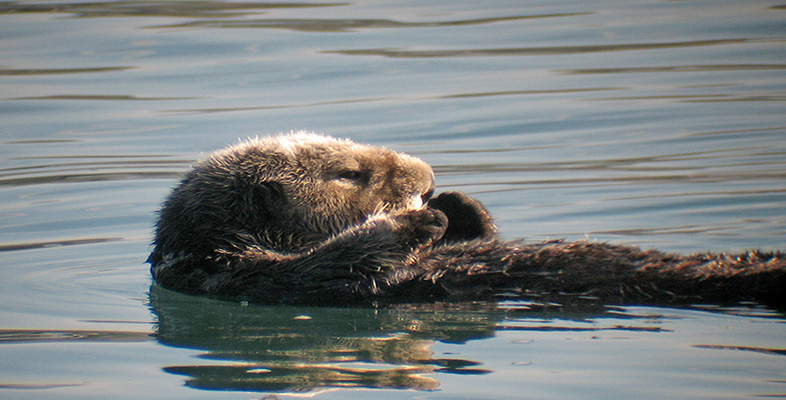
Some of the most unusual and versatile of all the mammals are the groups that live, feed and reproduce underwater. In this free course, Studying mammals: Return to the water, we will see how these formerly land-based mammals adapted to a return to the water, discussing such challenges as breathing, movement and communication. This is the seventh course in the Studying mammals series.
NOTE: The Studying mammals series is gradually being updated and replaced. You can study an improved freestanding version of this course, titled Aquatic mammals, here:
https://www.open.edu/openlearn/nature-environment/aquatic-mammals/content-section-0
NOTE: The Studying mammals series is gradually being updated and replaced. You can study an improved freestanding version of this course, titled Aquatic mammals, here:
https://www.open.edu/openlearn/nature-environment/aquatic-mammals/content-section-0
Course learning outcomes
After studying this course, you should be able to:
- contrast the physical properties of air and water and describe implications of such differences for aquatic mammals
- give examples of the adaptations displayed by aquatic mammals that enable them to hold their breath while submerged for relatively long periods
- describe some of the biological differences between pinnipeds, sirenians and cetaceans
- discuss the importance of communication by sound in aquatic mammals, describe the role of blubber and explain countercurrent heat exchange
- explain the diving response and its significance in natural dives.
First Published: 09/08/2012
Updated: 15/05/2019
Skip Rate and Review
Rate and Review
Create an account to get more
Track your progress
Review and track your learning through your OpenLearn Profile.
Statement of Participation
On completion of a course you will earn a Statement of Participation.
Access all course activities
Take course quizzes and access all learning.
Review the course
When you have finished a course leave a review and tell others what you think.