Skip to content
The Open University
Skip My preferences

My preferences

Skip Learning ToolsSkip Rate and Review

Rate and Review

Skip Alternative FormatsSkip Tags

Tags

Skip Share this with a friend

Share this with a friend

Help with sending a link (new window)
Permalink:
 

Topic outline


  • Time: 10 hours
    Level: Introductory


Introduction

  • Introduction Resource
  • Sixty-five million years ago, animal and plant life were very different from nowadays, but there were rat-sized placental mammals living successfully on the ground. They were insect eaters, i.e. insectivores,...
 

1 Meeting the insect eaters

  • 1 Meeting the insect eaters Resource
  • As you work through this unit you will come across boxes, like this one, which give you advice about the study skills that you will be developing as you progress through the unit. To avoid breaking up...
 

2 How insect eaters obtain their food

  • 2.1 Mammalian dentition Resource
  • Insects are generally very small animals. Many kinds are hard work to collect and not very nutritious because a high proportion of their mass is a protective and indigestible outer layer, called cuticle....
  • 2.2 Feeding techniques Resource
  • In Activity 1, below, you are asked to make notes from a TV sequence and then select some of the information from your notes and combine it with some from LoM into a single short piece of writing. Check...
 

3 Adaptations linked to feeding in insect eaters

  • 3.1 Introduction Resource
  • How evolution proceeds is obviously of central importance when studying mammals. Of fundamental importance to the way evolution works is the notion of natural selection, and in S182_3 Studying mammals:...
  • 3.2 Shrews Resource
  • Drawing on the notes you made about shrews in Activity 1, describe in a couple of sentences the water shrew's strategy for searching for and catching insect larvae.
  • 3.3 Moles Resource
  • In this section, you will meet one of the ways in which scientists are very precise about the way that they use ordinary words. Spot the difference between ‘The golden mole evolved webbed hind feet so...
  • 3.4 Anteaters Resource
  • View ‘The Insect Hunters’ on the DVD from 22.40–26.54, which shows the giant anteater, and make notes on what you see. On the basis of your notes, what features of the giant anteater could be regarded...
  • 3.5 Bats Resource
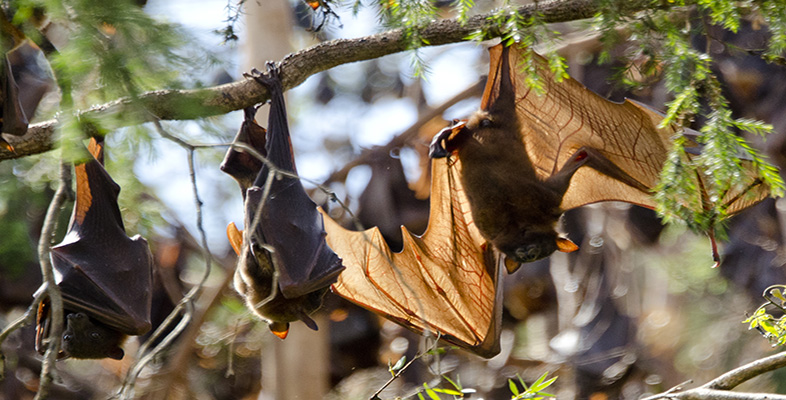
  • There are two more activities in this section that give you more practice in writing. You will see that you are again given an approximate number of words to aim for in your answer. This number is a guide...
 

4 Thinking about adaptation

  • 4 Thinking about adaptation Resource
  • Section 3 identified a range of adaptations in insect eaters, most linked with their mode of feeding. Particular structures are identified as having particular functions. But there are problems with the...
 

5 Temperature regulation and the consequence of size

  • 5.1 Introduction Resource
  • If you have already worked through S182_1 Studying mammals: a winning design, you'll be aware (from Section 5) that animals break down their food for conversion into usable forms of energy; thus, breakdown...
  • 5.2 Body size and metabolic rate Resource
  • Figure 6 is a slightly more complex graph than those used in S182_1. In particular, the masses of the mammals that are plotted on the horizontal axis vary so much that a normal scale would squeeze together...
  • 5.3 Body size and surface area Resource
  • You will be using some more maths in this section. Remember that areas are measured in units such as m2, which is read as metres squared or, more usually, square metres. Volumes are measured in units such...
 

6 Strategies for coping with cold and food shortage

  • 6.1 Toughing it out Resource
  • For small insectivorous mammals, the best solution to the problem of obtaining sufficient energy for their requirements, notably the maintenance of body temperature, is to feed continuously. But in temperate...
  • 6.2 Opting out Resource
  • This last section of the unit contains, I think, some of the most challenging science that you have met so far. Take it slowly, translating all the abbreviations in your head as you come to them (read...
 

References and Acknowledgements

Skip Log InSkip Related educational resources
© The Open University   +44 (0)845 300 60 90   Email us